
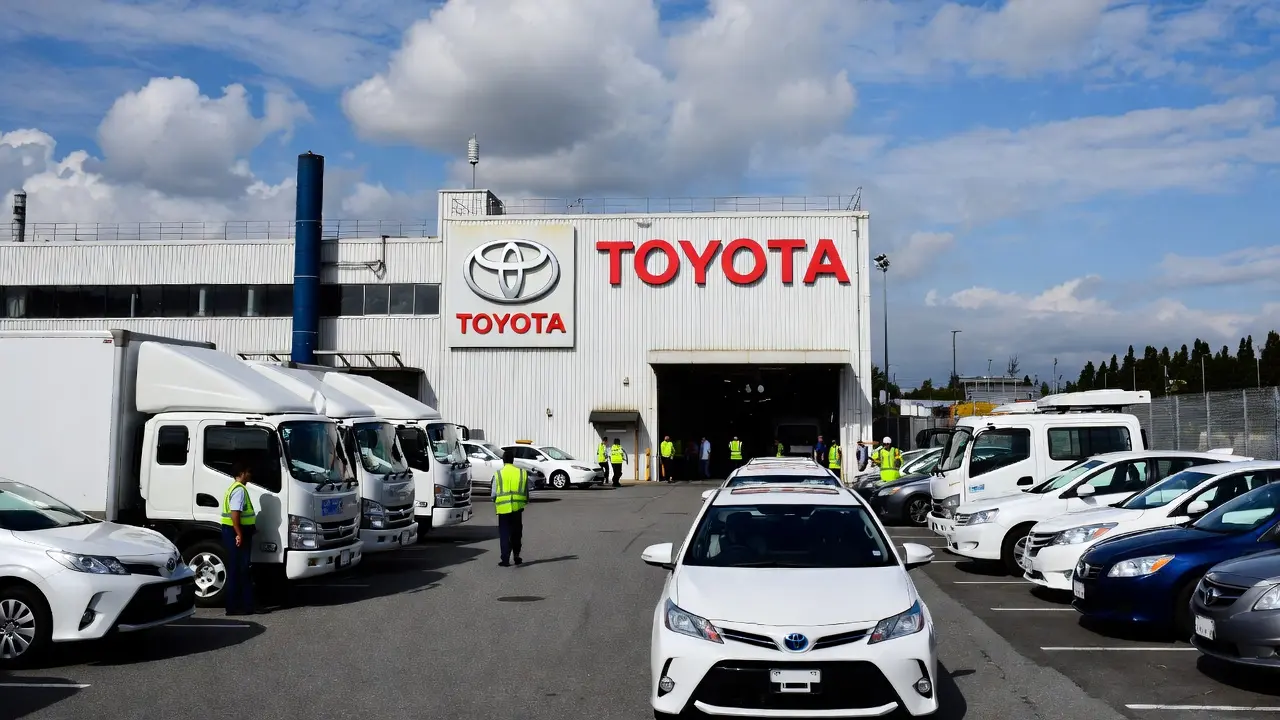
Toyota Motor Corporation is expected to intensify its localisation strategy and expand export operations from India as the weakening Indian rupee reshapes cost dynamics for global automakers. While currency depreciation often raises concerns over rising input costs, Toyota sees it as an opportunity to make India a more competitive manufacturing and sourcing hub.
The Japanese automaker has already made significant investments in India through Toyota Kirloskar Motor (TKM), and the current macroeconomic environment is likely to accelerate long-term plans focused on localisation, supplier development, and overseas exports.
Currency Movement Driving Strategic Shift
A weakening rupee generally increases the cost of imported components and raw materials. However, it also improves export competitiveness by lowering production costs in dollar terms. For Toyota, which operates on a global supply chain model, this shift presents a dual opportunity: reduce dependence on imports and increase exports of locally produced vehicles and components.
Industry experts believe Toyota will respond by deepening localisation levels across its product portfolio. This includes sourcing more components locally, increasing domestic value addition, and reducing exposure to foreign exchange volatility.
Focus on Higher Local Content
Toyota has already been working toward improving localisation in India, particularly for models manufactured under the Toyota–Suzuki partnership. Vehicles such as compact SUVs and MPVs developed for the Indian market are expected to see higher local content in the coming years.
The weakening rupee is likely to further encourage Toyota to work closely with Indian suppliers to localise key components, including powertrain parts, electronics, and interior modules. By doing so, the company can offset rising import costs while also strengthening the domestic auto component ecosystem.
Localisation also aligns with Toyota’s cost-efficiency goals, helping maintain competitive pricing in a price-sensitive market like India.
Export Potential Gains Momentum
In addition to localisation, Toyota is expected to expand exports from India, especially to emerging markets in Asia, Africa, and Latin America. With production costs becoming more attractive due to currency depreciation, India could play a larger role in Toyota’s global manufacturing network.
Vehicles and components manufactured in India may increasingly be shipped to right-hand-drive markets where cost competitiveness is crucial. Toyota has previously exported select models and parts from India, and the current currency trend could encourage higher export volumes.
Export-led growth would also help Toyota balance domestic market fluctuations while improving capacity utilisation at its Indian manufacturing facilities.
Strengthening the Supplier Ecosystem
A key part of Toyota’s localisation push involves strengthening relationships with Indian suppliers. The company is known for its stringent quality standards, and increased localisation would require extensive supplier training, process improvements, and technology sharing.
Toyota’s well-established production philosophy, including the Toyota Production System (TPS), is expected to play a major role in upgrading local supplier capabilities. Over time, this could help Indian vendors become part of Toyota’s global supply chain, supplying components not just for domestic production but also for international operations.
Such developments would have broader benefits for the Indian auto industry, including job creation, skill development, and increased exports of auto components.
Balancing Cost Pressures
While localisation offers long-term advantages, Toyota may still face short-term cost pressures due to higher prices of imported raw materials and technology-intensive components. The company is expected to carefully manage pricing strategies to avoid passing excessive costs on to consumers.
Instead of aggressive price hikes, Toyota could focus on efficiency improvements, scale benefits, and cost optimisation across operations. Selective price revisions, combined with feature rationalisation and improved localisation, may help the brand remain competitive.
Long-Term Commitment to India
Toyota’s response to the weakening rupee reflects its long-term commitment to the Indian market. Rather than viewing currency volatility as a risk alone, the company appears to be leveraging it as an opportunity to strengthen its manufacturing base.
India’s growing domestic demand, improving infrastructure, and policy support for manufacturing continue to make it an attractive destination for global automakers. Toyota’s emphasis on localisation and exports fits well within the broader “Make in India” vision.
Conclusion
The weakening rupee is likely to act as a catalyst for Toyota to accelerate localisation efforts and boost exports from India. By reducing import dependence, strengthening the supplier ecosystem, and leveraging India’s cost advantages, Toyota can improve resilience against currency fluctuations while enhancing its global competitiveness.
For the Indian auto industry, Toyota’s strategy could lead to increased investments, higher export volumes, and deeper integration into global supply chains. As economic conditions evolve, such adaptive strategies will be crucial in shaping the future of automotive manufacturing in India.