
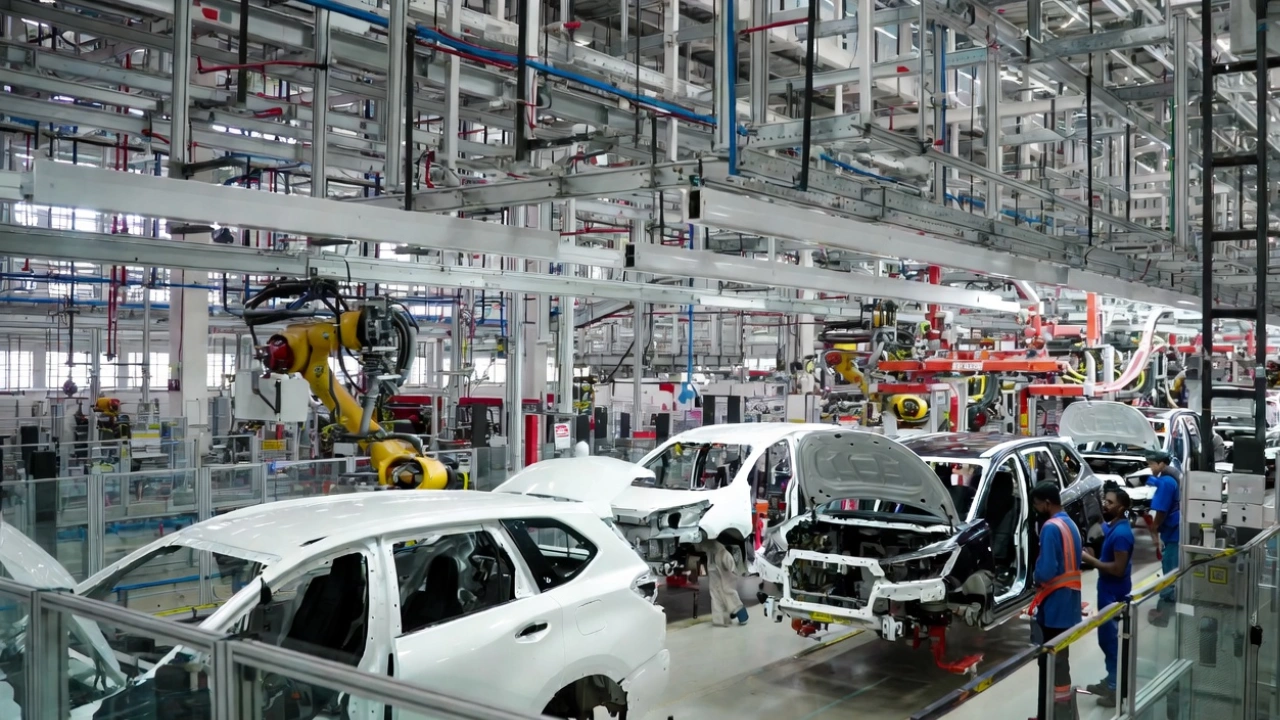
As the Indian rupee continues to face depreciation pressures against major global currencies, automakers operating in the country are reassessing their strategies to stay competitive. Among them, Toyota Kirloskar Motor (TKM) sees the weakening rupee not just as a challenge, but as an opportunity—one that could significantly push localisation efforts and strengthen India’s role as an export hub.
Toyota has long advocated deeper localisation in India, and the current currency scenario is expected to further accelerate this transition while making Indian-made vehicles and components more attractive in global markets.
Currency Pressure and the Cost Challenge
A weakening rupee typically increases the cost of imports, particularly for automakers that rely heavily on imported components, powertrains, and electronics. For Toyota, which operates in multiple global markets with strict quality benchmarks, imported parts play a role in ensuring consistency and reliability.
However, rising import costs can squeeze margins or force manufacturers to increase vehicle prices—an undesirable outcome in a price-sensitive market like India. To counter this, Toyota is expected to expand local sourcing and manufacturing, reducing dependency on foreign components and insulating itself from currency fluctuations.
Localisation as a Strategic Priority
Toyota has already made steady progress in localisation across its Indian lineup, particularly in high-volume models such as the Innova Crysta, Innova Hycross, Fortuner, Urban Cruiser Hyryder, and Glanza. The company has also collaborated closely with local suppliers to ensure components meet Toyota’s global quality standards.
With the rupee under pressure, localisation is no longer just a cost-saving exercise—it is becoming a strategic necessity. Increasing the use of locally manufactured parts helps Toyota control costs, improve supply-chain resilience, and shorten production cycles.
Industry experts believe that Toyota may now fast-track localisation of high-value components, including electronics, battery modules for electrified vehicles, and powertrain parts, which were earlier sourced from overseas markets.
Export Opportunities Gain Momentum
While a weaker rupee raises import costs, it simultaneously improves export competitiveness. Vehicles and components manufactured in India become more cost-effective for global markets, particularly in regions such as Africa, Latin America, the Middle East, and Southeast Asia.
Toyota already exports select India-made vehicles and components, and the current currency environment could encourage the company to expand its export portfolio. India’s improving manufacturing ecosystem, skilled workforce, and growing supplier base further strengthen its appeal as a global production hub.
With increased localisation, Toyota can also meet export requirements more efficiently, aligning with the company’s global strategy of regional manufacturing and sourcing.
Impact on Hybrid and Electric Vehicle Plans
Toyota has been vocal about its multi-pathway approach to electrification, focusing on hybrids, flex-fuel vehicles, and EVs rather than a single technology. Localising hybrid components—such as electric motors, battery packs, and control systems—could become a key area of focus as currency pressures rise.
Local production of hybrid systems would not only help control costs but also make strong-hybrid vehicles more affordable for Indian customers. This aligns well with Toyota’s long-term vision of promoting lower-emission technologies that are practical for Indian driving conditions.
For upcoming electric vehicles, localisation could also help Toyota price its EVs more competitively while reducing exposure to volatile global battery supply chains.
Strengthening the Supplier Ecosystem
A major benefit of increased localisation is the development of India’s auto component ecosystem. Toyota’s push toward local sourcing could lead to greater investments in tooling, technology transfer, and skill development among Indian suppliers.
This, in turn, supports the government’s “Make in India” and “Atmanirbhar Bharat” initiatives, while creating a virtuous cycle of growth for both automakers and component manufacturers.
Toyota’s long-standing emphasis on quality and process discipline means local suppliers would be required to meet stringent global standards—raising the overall competitiveness of India’s auto industry.
Long-Term Outlook
While currency volatility poses short-term challenges, Toyota appears well-positioned to turn the situation into a long-term advantage. By deepening localisation and leveraging India’s export potential, the company can reduce costs, improve supply-chain stability, and enhance its global competitiveness.
For Indian consumers, this strategy could translate into better-priced vehicles, increased localisation-driven reliability, and access to globally relevant products made in India.
Conclusion
The weakening rupee is acting as a catalyst for Toyota to accelerate localisation and expand exports from India. Rather than viewing currency depreciation as a setback, Toyota is aligning its India strategy to capitalise on the situation—strengthening domestic manufacturing while positioning India as a key pillar in its global operations.
As localisation deepens and export volumes grow, India could emerge as one of Toyota’s most important production and sourcing bases outside Japan.