
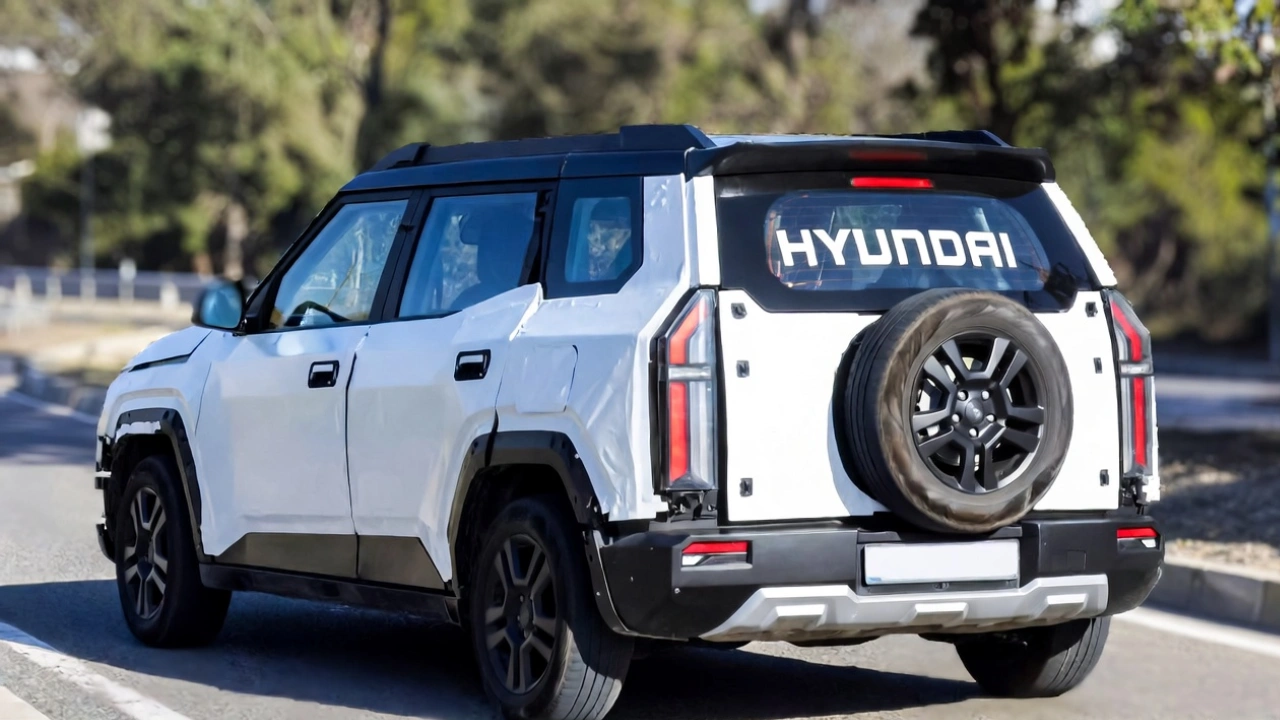
Hyundai Motor India is gearing up to refresh its popular micro-SUV, the Hyundai Exter, with a mid-cycle facelift. Recently, a heavily camouflaged test mule of the upcoming Exter facelift was spotted testing on Indian roads, hinting that the launch could be closer than expected. While the camouflage hides most details, several changes to the design, interior, and powertrain can still be identified, giving us a fair idea of what to expect from the updated model.
Positioned as a direct rival to the Tata Punch, the Hyundai Exter facelift aims to stay competitive in the fast-growing entry-level SUV segment by offering refreshed styling, upgraded features, and enhanced convenience.
Hyundai Exter Facelift: Exterior Design Updates
Despite the heavy camouflage, the overall silhouette of the Hyundai Exter facelift remains familiar. The boxy stance and upright proportions continue, maintaining the SUV’s rugged appeal.
At the front, the split headlamp layout is expected to remain unchanged. Hyundai is likely to retain its signature H-shaped LED daytime running lights, which have become a defining design element of the Exter. However, the front bumper appears to be revised, featuring subtle reshaping that could give the SUV a slightly more aggressive look.
The radiator grille is also expected to receive a refreshed pattern, helping differentiate the facelift from the current model. Minor cosmetic tweaks like redesigned skid plates or contrasting inserts may also be part of the update.
At the rear, spy shots suggest a reworked tailgate design paired with rectangular tail lamps. The rear bumper is also likely to be updated for a more contemporary appearance. Additionally, Hyundai may introduce newly designed alloy wheels, adding freshness to the side profile.
Overall, while the facelift won’t be a radical redesign, the changes should be enough to keep the Exter visually relevant.
Hyundai Exter Facelift: Interior and Feature Upgrades
One of the biggest improvements is expected inside the cabin. The 2026 Hyundai Exter facelift could receive several feature additions aimed at improving comfort, technology, and everyday usability.
The highlight could be the introduction of a dual-pane sunroof, a feature that is increasingly popular in this segment. Hyundai may also upgrade the infotainment system with a larger touchscreen display, offering improved graphics, faster response, and enhanced smartphone connectivity.
The instrument cluster is likely to be replaced with a fully digital unit, providing a more modern and premium feel. Other expected additions include a driver armrest, split-folding rear seats, and improved seat cushioning for better long-distance comfort.
Hyundai could also focus on smarter storage solutions, making the cabin more practical for urban use. While the overall dashboard layout may remain similar, improved materials and minor design tweaks are expected to elevate the cabin experience.
Mechanically, the facelifted Hyundai Exter is expected to continue with the existing 1.2-litre naturally aspirated petrol engine. This engine produces 82 bhp of power and 114 Nm of torque and is available with both manual and AMT transmission options.
The Exter will also continue to offer Hyundai’s Hy-CNG Duo technology. In CNG mode, the engine delivers 68 bhp and 95.2 Nm of torque, making it a practical and economical option for buyers focused on fuel efficiency.
A notable update could be the introduction of a CNG-AMT combination, which would be a first in this segment and could significantly enhance convenience for CNG buyers.
Expected Launch and Positioning
The Hyundai Exter facelift is expected to debut sometime in 2026, and it will continue to compete against rivals like the Tata Punch, Citroën C3, and Maruti Ignis. With refreshed styling, feature-rich interiors, and improved powertrain options, Hyundai aims to strengthen the Exter’s appeal among urban and first-time SUV buyers.