
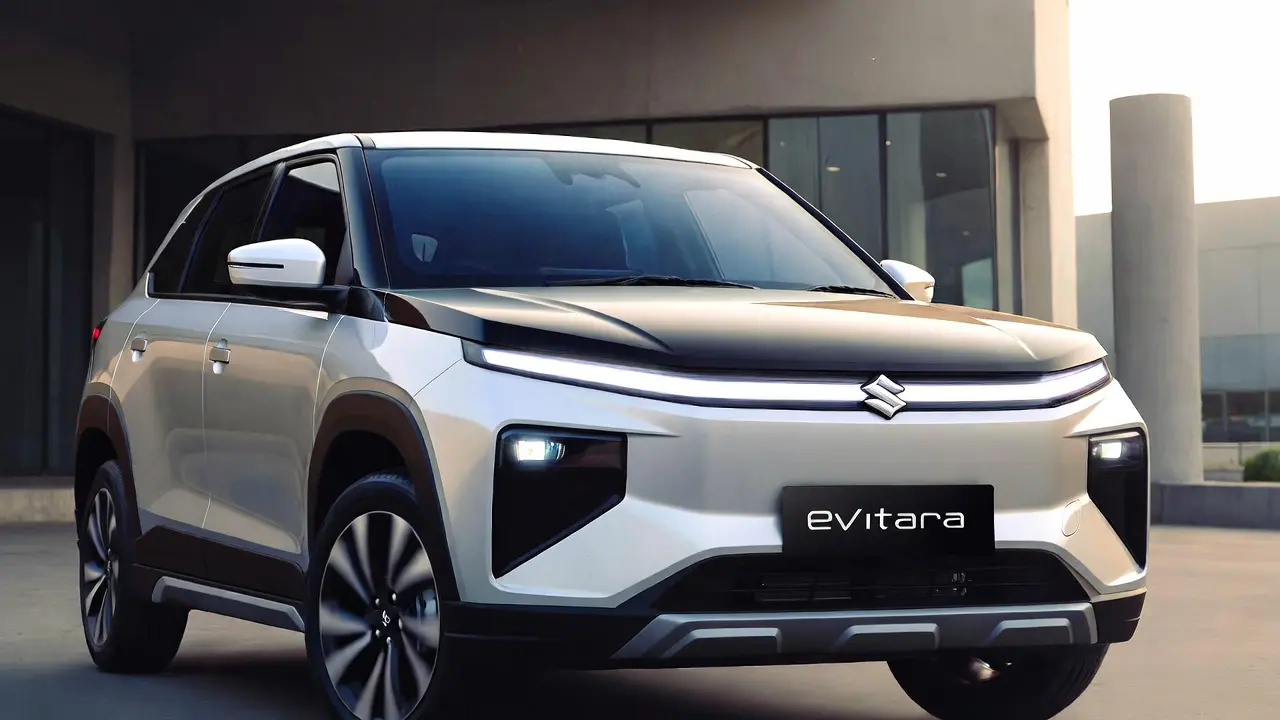
Maruti Suzuki is gearing up to enter India’s fast-evolving electric SUV space with the much-anticipated eVitara, expected to make its official debut in February 2026. While the spotlight is naturally on range, performance, and features, the real story revolves around one critical factor: pricing. In India’s SUV market, the ₹15 lakh to ₹25 lakh bracket is where volume is created—and also where electric vehicles face their toughest challenge.
This price band represents the heart of the Indian buyer’s mindset. It is aspirational yet attainable, crowded with strong ICE SUVs and increasingly competitive hybrids. For EVs, however, this space is difficult to crack due to one persistent issue: high component costs, largely driven by imported batteries, motors, and power electronics.
Why the Timing Matters
The timing of the eVitara’s launch is significant. The Economic Survey 2025–26 highlighted a core contradiction in India’s EV journey. While adoption targets are ambitious and policy support is strong, the supply chain for critical EV components remains heavily dependent on imports. This gap between intent and infrastructure directly impacts affordability, especially for mass-market electric SUVs.
For a brand like Maruti Suzuki—long associated with value, efficiency, and mass accessibility—this creates a unique challenge. The eVitara is not just another product launch; it is a test of whether India’s largest carmaker can translate its strengths into the EV era without losing its affordability edge.
Familiar, Safe, and Intentionally Conservative
On paper, the Maruti Suzuki eVitara avoids radical experimentation. Two battery options are expected: a 49 kWh pack for the entry variants and a 61.1 kWh pack for higher trims. Power outputs are likely to be around 142 bhp for the smaller battery and 172 bhp for the larger one, with torque figures hovering near 192.5 Nm.
The larger battery version is also expected to offer an all-wheel-drive option, broadening its appeal for buyers seeking better traction and mild off-road capability. Claimed range figures are expected to peak at around 543 km, placing the eVitara firmly in line with segment expectations.
None of these numbers are designed to shock the market. Instead, they reflect Maruti’s traditional approach—predictable performance, usable range, and low ownership anxiety. This is an EV meant to feel familiar to first-time electric buyers rather than experimental or niche.
Competition and the Reality of EV Economics
The competitive landscape is already taking shape. Buyers shopping in this segment will naturally compare the eVitara with electric SUVs from Hyundai Motor Company, MG Motor, and upcoming entrants timed around 2026. Several of these rivals already offer strong feature sets, premium interiors, and competitive range figures.
Maruti Suzuki’s biggest advantage lies elsewhere: brand trust, unmatched service reach, and a deeply established ownership ecosystem. For many Indian buyers, these factors still outweigh spec-sheet superiority.
However, EV economics remain unforgiving. If key components continue to be imported, pricing flexibility is limited. Aggressive pricing directly eats into margins, something even a high-volume manufacturer like Maruti cannot ignore indefinitely.
The Price Will Reveal the Strategy
This is where the eVitara’s launch price becomes crucial. If Maruti Suzuki manages to position the entry variant below ₹18 lakh, it would signal a scale-first strategy—prioritising volumes, market penetration, and long-term ecosystem development over short-term profitability.
Such an approach would help normalise EV ownership, build charging habits, and create confidence around resale values. It would also reinforce Maruti’s long-standing image as the brand that democratises new technology.
On the other hand, if pricing lands closer to ₹23–₹25 lakh, it suggests a margin-protection strategy. In this scenario, Maruti would be acknowledging the cost realities of imported components and relying on brand loyalty, reliability perceptions, and resale confidence to justify the premium.
While this route is safer from a business perspective, it risks disappointing buyers who expect Maruti to redefine affordability in EVs the way it once did with small petrol cars.
Beyond the Launch: The Bigger Picture
February 2026 may be the announcement moment, but the real impact of the eVitara will unfold over time. If Maruti leverages exports alongside domestic sales, it could unlock scale benefits, strengthen supplier negotiations, and gradually reduce costs. This, in turn, could allow for more competitive pricing revisions in the future.
If costs remain stubbornly high, however, the eVitara may end up symbolising India’s broader EV challenge: building capable, desirable electric SUVs is achievable—but making them truly mass-market affordable remains difficult when the most expensive components are sourced from outside the country.