
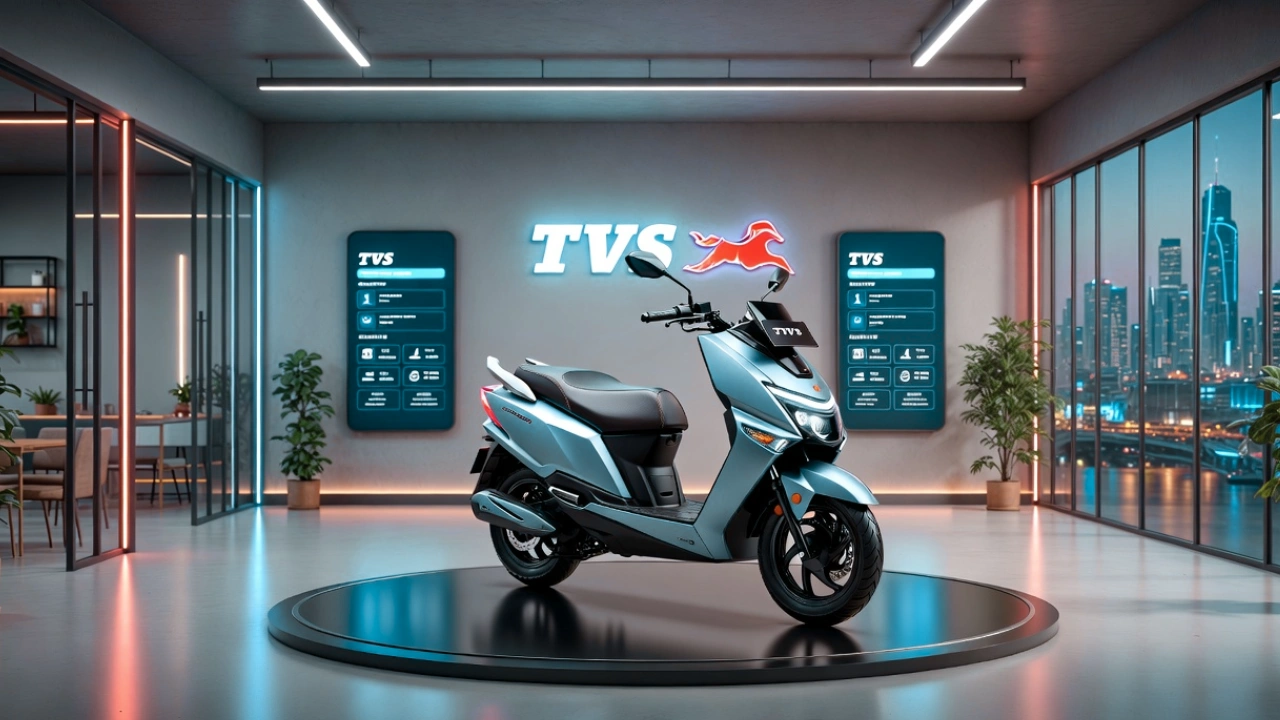
The TVS Orbiter real world range test provides valuable insight into how this affordable electric scooter performs in everyday riding conditions. Positioned as a practical urban commuter in the TVS electric lineup, the Orbiter focuses on delivering strong riding range rather than aggressive performance. Using the proven 3.1kWh lithium-ion battery pack borrowed from the TVS iQube, the scooter promises dependable efficiency for city riders looking to reduce fuel costs and emissions.
Priced at approximately ₹1.05 lakh ex-showroom Delhi (before subsidies) and around ₹1.17 lakh on-road in many cities, the TVS Orbiter competes in the budget electric scooter segment while offering solid build quality and reliable brand backing.
Battery, Riding Modes and Performance Tuning
The TVS Orbiter uses a 3.1kWh battery pack designed for consistent power delivery and long-term durability. The scooter is tuned to prioritize riding range and smoothness rather than outright acceleration, making it suitable for daily commuting, short office runs, and urban errands.
Two riding modes are available: Eco and City. Eco mode is optimized for maximum energy efficiency and delivers a modest top speed of approximately 46 kmph, which works well in congested streets and slow-moving traffic. City mode increases throttle response and allows a higher indicated top speed of around 68 kmph, making it more practical for wider roads and faster urban traffic flow.
For real-world testing, City mode was selected to evaluate realistic daily usage rather than controlled efficiency riding.
Real World Riding Conditions and Test Setup
The real-world range test was conducted in Mumbai city conditions, ensuring a mix of traffic density, road quality, stop-and-go movement, and open stretches. The scooter was fully charged before starting the test, and tyre pressures were maintained as recommended by the manufacturer to ensure accuracy.
At 100 percent battery charge, the distance-to-empty indicator showed an estimated range of 97 kilometers in City mode. The test route included moderate acceleration, cruising speeds between 50–55 kmph, and realistic urban riding patterns rather than conservative riding.
After covering approximately 51 kilometers, the battery still retained nearly 60 percent charge, demonstrating strong energy efficiency in real-world traffic.
Battery Consumption Data and Observed Range
The battery discharge pattern during the test showed consistent and predictable energy usage. The recorded riding data revealed the following approximate coverage at different battery levels:
At 80 percent battery, the scooter had covered around 27.5 km.
At 60 percent battery, total distance reached approximately 51.4 km.
At 40 percent battery, the scooter covered nearly 71.4 km.
At 20 percent battery, distance increased to about 91.7 km.
At 10 percent battery, the scooter reached roughly 102.6 km.
At complete discharge, the total riding range recorded was approximately 112.6 km.
The final 10 percent of battery delivered nearly 10 additional kilometers, showing efficient power management even at low charge levels.
Overall Real World Range Performance
The TVS Orbiter achieved a total real-world riding range of 112.6 kilometers in City mode, which is impressive for an electric scooter in this price category. Since the test was conducted entirely in City mode, riders who mix Eco and City riding could potentially extract slightly higher overall range during normal usage.
The scooter maintained steady cruising speeds but required slightly more time for overtaking, indicating its focus on efficiency rather than aggressive acceleration.
Factors Affecting Riding Range
Several real-world factors can influence the final riding range of the TVS Orbiter. Rider weight plays a significant role, as heavier loads increase battery consumption. Aggressive throttle usage, frequent rapid acceleration, and higher cruising speeds can also reduce overall efficiency.
Traffic conditions, road surface quality, tyre pressure maintenance, and riding style contribute to daily range variations. The Orbiter delivers best efficiency when ridden smoothly with traffic flow rather than aggressive riding patterns.
Features, Warranty and Practical Ownership
The TVS Orbiter comes equipped with essential modern features such as LED brake and tail lights, daytime running lights, digital clock, and a comprehensive digital instrument display. It offers a standard variant with practical urban usability.
Warranty coverage includes 3 years or 50,000 kilometers, providing peace of mind for long-term ownership. Low running costs, reduced maintenance requirements, and strong charging efficiency further enhance ownership value for daily commuters.
Autocar India Testing Methodology
Before real-world range testing, the scooter battery is fully charged, tyre pressures are standardized, and the vehicle is ridden under mixed city and highway conditions while following speed limits. The test continues until the battery is completely depleted or the scooter shuts down, ensuring accurate and repeatable range measurement.
Final Verdict
The TVS Orbiter real world range test confirms that the scooter delivers reliable efficiency and strong value in the affordable electric scooter segment. With a realistic riding range of over 112 km, smooth ride characteristics, dependable battery performance, and practical features, the Orbiter is well suited for daily urban commuting.
For riders seeking a budget-friendly electric scooter with predictable range, low operating costs, and trusted TVS engineering, the Orbiter stands as a smart and sensible choice in the growing EV market.