
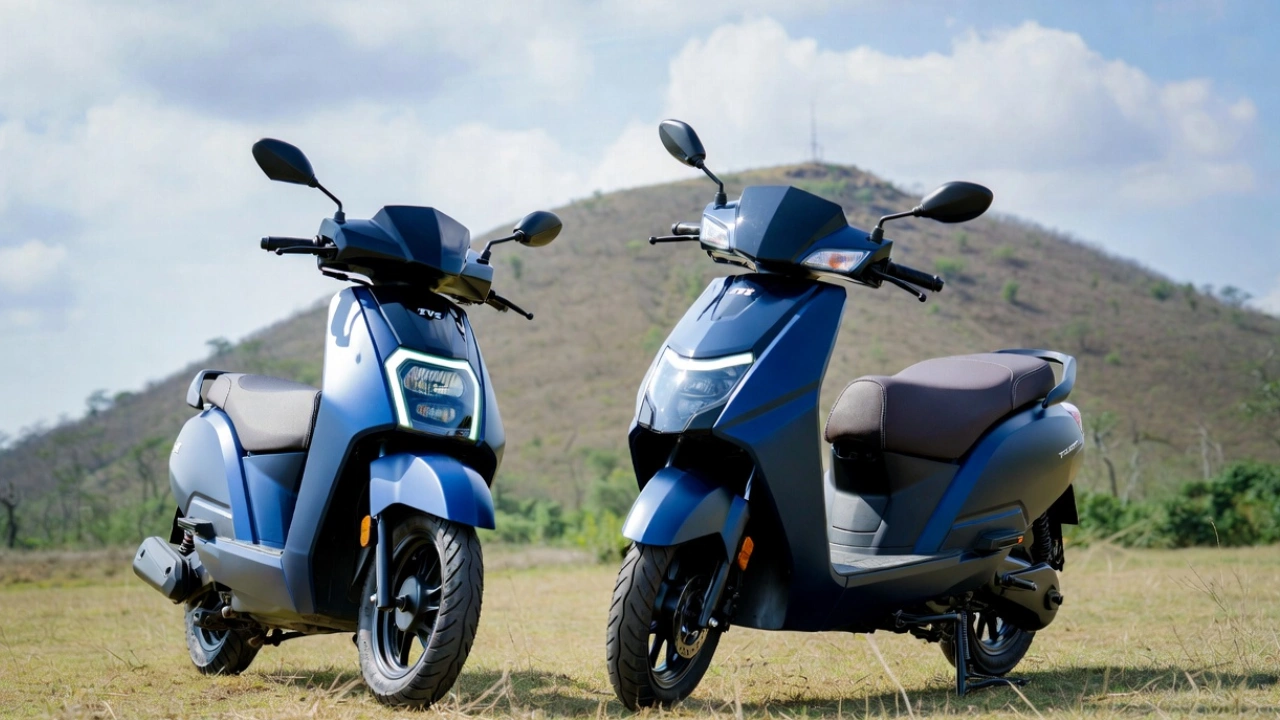
TVS Motor Company is gearing up to significantly expand its electric two-wheeler production as demand for its EV portfolio continues to surge across India. The company is now closing in on an important milestone of nearly 5 lakh electric scooters in annual production, driven by the strong and sustained market response to the TVS iQube and the recently launched TVS Orbiter.
The update was shared by KN Radhakrishnan, CEO and Director of TVS Motor Company, during discussions with analysts following the company’s Q3 FY26 earnings call. According to him, the company is actively reviewing its electric vehicle manufacturing capacity, supported by rising demand and a gradual easing of supply-side challenges that had previously restricted output.
TVS EV Growth Outpaces Industry Average
TVS Motor Company has continued to outperform the broader electric two-wheeler market in recent quarters. During Q3 FY26, the company recorded electric two-wheeler sales of 1.06 lakh units, reflecting a strong 40 percent year-on-year growth.
This performance is particularly noteworthy given that production had been moderated during parts of the quarter due to component shortages. Despite these challenges, TVS managed to grow faster than the overall EV industry, reinforcing its position as one of India’s leading electric two-wheeler manufacturers.
Radhakrishnan noted that supply constraints have now eased considerably, allowing production volumes to stabilise and enabling the company to better meet rising retail demand.
iQube Continues as TVS’s EV Mainstay
The TVS iQube remains the cornerstone of the company’s electric vehicle strategy. Currently India’s bestselling electric scooter, the iQube has built strong credibility among urban and family-oriented buyers due to its comfortable ride, dependable performance, and multiple variant options.
TVS is presently producing around 30,000 units of the iQube per month, reflecting its consistent demand across major cities and emerging EV markets. With expanding charging infrastructure and increased consumer awareness, the iQube continues to deliver steady volume growth quarter after quarter.
Orbiter Adds Incremental Volumes at a Lower Entry Point
Complementing the iQube is the TVS Orbiter, which has been introduced as a more accessible entry point into electric mobility. Production of the Orbiter is currently approaching 10,000 units per month, with volumes expected to rise further as component availability improves.
Radhakrishnan emphasised that the iQube and Orbiter are designed to cater to distinct customer segments, ensuring they grow alongside each other rather than competing internally.
“Demand for both the iQube and the newly launched Orbiter has been encouraging, with the two products addressing different customer segments rather than cannibalising each other,” he said.
While it is still early to analyse long-term usage trends for the Orbiter, initial demand has been strong in launch markets. “It is too early to give actual usage trends, but the demand is excellent where we have launched. The good news is iQube is also growing, and Orbiter is also growing,” he added.
Positioned as a value-focused EV, the Orbiter prioritises maximum riding range at a competitive price point. It is priced at ₹1.17 lakh (on-road), offers a claimed range of 158 km, and comes with a three-year or 50,000 km warranty, making it attractive to first-time EV buyers.
Capacity Expansion Plans Under Review
With demand strengthening across its electric lineup, TVS Motor Company is now reviewing its EV capacity expansion plans for the next financial year. The company has confirmed that it will invest further in electric two-wheeler manufacturing capacity to support higher production volumes.
“We are reviewing capacity for next year, and we are definitely investing in EV capacity because this is something which is growing,” Radhakrishnan said.
The objective is to ensure that supply keeps pace with demand as EV adoption accelerates, while maintaining quality standards and reducing waiting periods.
Supply Constraints Ease After Magnet Shortages
Like many EV manufacturers globally, TVS faced challenges related to the availability of rare-earth magnets, a critical component used in electric motors. These shortages temporarily affected production during parts of FY26.
However, Radhakrishnan confirmed that the situation has improved significantly and is expected to normalise fully soon. “We had some challenges with magnet availability, but now it is better. By another month, you will see full supplies of EVs in the market,” he said.
Improved component availability is expected to enable higher production and better dealer availability in the coming months.
EV Penetration Expected to Rise Further
TVS also highlighted the broader growth potential of electric mobility in India. EV penetration in the three-wheeler segment has already reached around 32 percent, and similar upward trends are expected across two-wheelers and other EV categories as supply constraints ease and infrastructure continues to expand.
“As volumes are growing, we are becoming better quarter after quarter,” Radhakrishnan noted, expressing confidence in the company’s EV growth trajectory.
Outlook
With the iQube sustaining leadership volumes and the Orbiter adding fresh demand at a lower price point, TVS Motor Company is well positioned to move closer to its 5 lakh electric scooter annual production target. As capacity expansion progresses and supply issues fade, the company is expected to further strengthen its presence in India’s fast-growing electric two-wheeler market.