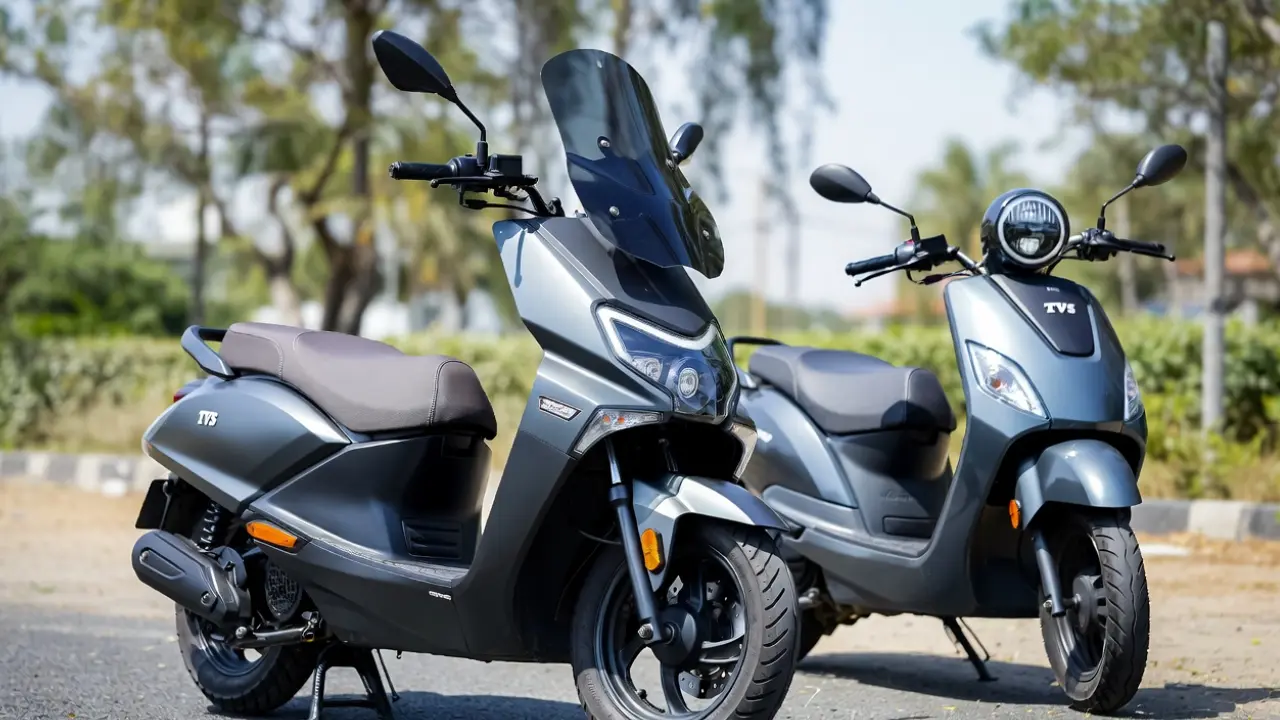
TVS Motor Company is preparing to further expand its electric two-wheeler manufacturing capacity as demand for its EV portfolio continues to rise steadily. The company is now approaching a significant production milestone of nearly 5 lakh electric scooters annually, driven by the strong market response to the TVS iQube and the newly launched TVS Orbiter.
The development was confirmed by KN Radhakrishnan, CEO and Director of TVS Motor Company, during interactions with analysts following the company’s Q3 FY26 earnings call. According to Radhakrishnan, the decision to review capacity expansion is being supported by robust customer demand and a gradual easing of supply-side challenges that had earlier constrained EV production.
Strong Growth Momentum in EV Sales
TVS Motor Company has continued to outperform the broader electric two-wheeler market in recent quarters. During Q3 FY26, the company recorded electric scooter sales of 1.06 lakh units, reflecting strong quarter-on-quarter growth and reinforcing its position as one of the leaders in India’s EV space.
Radhakrishnan noted that TVS’s EV growth rate has exceeded the overall industry average, highlighting the brand’s strengthening presence in the electric mobility segment. With supply constraints easing, production volumes have become more stable, allowing TVS to better align output with market demand.
iQube Remains the Volume Driver
The TVS iQube, currently India’s bestselling electric scooter, continues to be the backbone of the company’s EV strategy. Since its launch, the iQube has built a strong reputation for reliability, performance, and practical real-world range, making it popular among urban commuters as well as family buyers.
The scooter’s consistent demand has played a major role in pushing TVS closer to the 5 lakh annual EV production mark. The company has also expanded the iQube lineup with multiple variants and battery options, enabling it to cater to a wider range of price points and usage needs.
Orbiter Adds Fresh Momentum
Alongside the iQube, TVS’s newly launched Orbiter electric scooter is also witnessing encouraging demand. According to Radhakrishnan, the Orbiter is performing well in markets where it has been introduced and is attracting a different customer base compared to the iQube.
Importantly, TVS has clarified that the two models are complementary rather than competing products. “The demand for both iQube and Orbiter has been encouraging, with the two products addressing different customer segments rather than cannibalising each other,” Radhakrishnan said.
While it is still early to analyse long-term usage patterns for the Orbiter, initial market feedback has been positive. “It is too early to give actual usage trends, but the demand is excellent in the markets where we have launched,” he added.
Supply Constraints Ease, Production Stabilises
One of the key factors enabling TVS to consider capacity expansion is the easing of supply-side constraints. Over the past year, EV manufacturers across the industry faced challenges related to battery sourcing, semiconductor availability, and logistics.
TVS now reports improved stability across its supply chain, allowing the company to maintain consistent production schedules. This has not only helped meet current demand but has also given management greater confidence in planning future capacity additions.
Capacity Review Underway
With demand showing no signs of slowing down, TVS Motor Company is actively reviewing options to scale up EV production further. While the company has not yet disclosed specific timelines or investment figures, the goal is clear: to support rising volumes of both iQube and Orbiter without compromising delivery timelines or product quality.
Reaching an annual output of nearly 5 lakh electric scooters would mark a major milestone for TVS and underline its long-term commitment to electric mobility in India.
Outlook for TVS Electric Portfolio
Looking ahead, TVS Motor Company appears well-positioned to benefit from India’s growing shift toward electric two-wheelers. With a strong product lineup, improving supply conditions, and rising consumer acceptance, the company is expected to continue gaining market share in the EV segment.
The parallel growth of both the iQube and Orbiter suggests that TVS’s strategy of targeting multiple customer segments is paying off, setting the stage for sustained expansion in the coming quarters.