
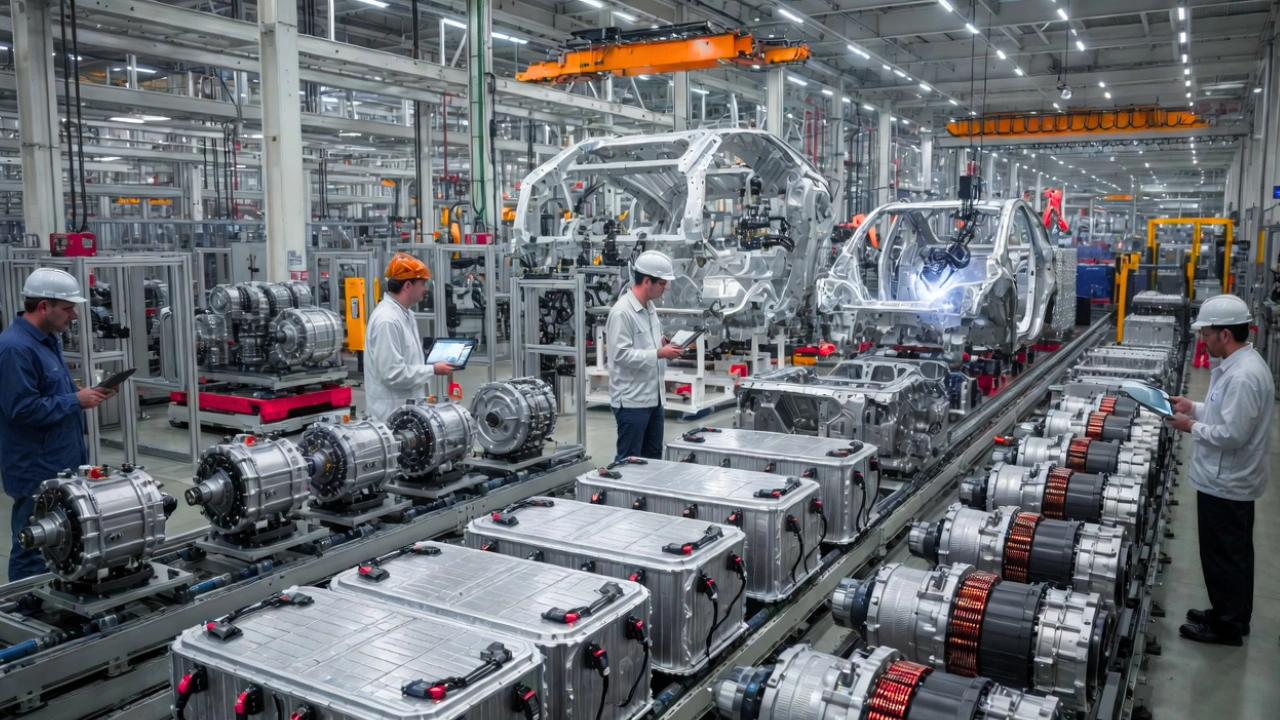
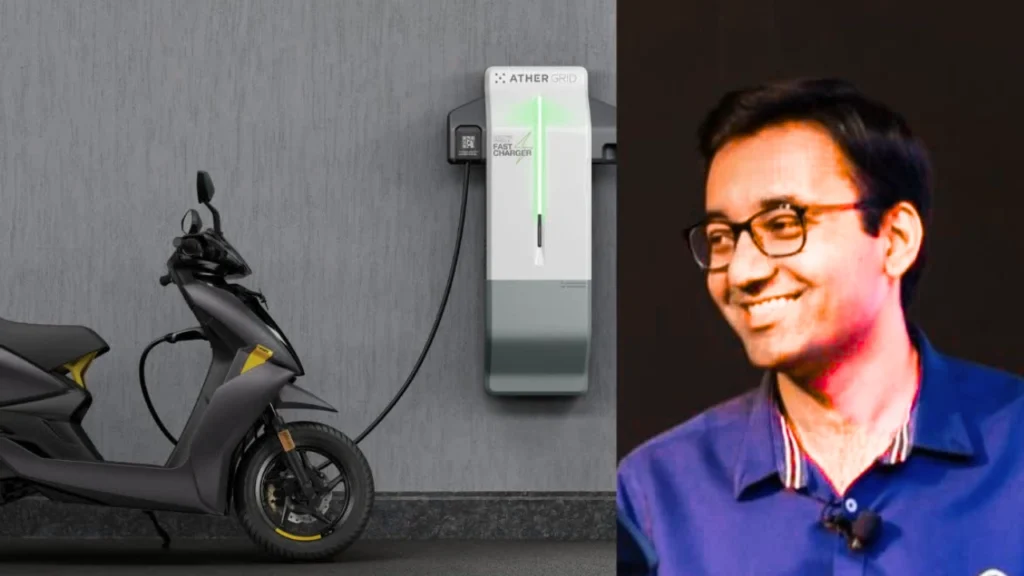
India’s electric vehicle (EV) industry is undergoing a historic transformation. What began as an assembly-led market heavily dependent on imported components is rapidly evolving into a technology-driven manufacturing ecosystem focused on domestic innovation, machine-building capability, and long-term self-reliance. At the center of this shift is Ather Energy, one of India’s most prominent EV manufacturers, led by co-founder and CEO Tarun Mehta.
Speaking at the IMTEX Forming 2026 exhibition in Bengaluru, Mehta outlined a powerful vision for India’s EV future—one rooted not in low-cost assembly, but in indigenous engineering, advanced manufacturing technologies, and technology sovereignty.
India’s EV Manufacturing Evolution: From Imports to Innovation
A decade ago, India had minimal domestic capacity to manufacture critical EV components. Lithium-ion batteries, motors, controllers, and power electronics were mostly sourced from China and other international markets. Local suppliers lacked tooling capability, engineering depth, and production scale to support a competitive EV ecosystem.
Today, that picture has changed significantly. Driven by government initiatives such as Make in India and Production Linked Incentive (PLI) schemes, Indian companies have invested heavily in domestic design, tooling, and manufacturing. Many EV components that were once imported are now being designed and manufactured within India, improving supply chain resilience and reducing geopolitical risk.
According to Mehta, this transformation did not happen overnight. It is the result of consistent localization efforts, supplier partnerships, and long-term investments in manufacturing infrastructure.
Why Manufacturing Innovation Drives Product Innovation
One of the most striking examples of Indian manufacturing innovation is Ather’s hybrid aluminum chassis. Unlike traditional scooter frames used globally, Ather developed a unique aluminum frame architecture that is lighter, stronger, and optimized for electric mobility. The entire design, tooling, and manufacturing process was developed in India.
However, Mehta emphasized that such innovation was only possible because of advancements in high-pressure die casting and scalable manufacturing processes. Without modern manufacturing capabilities, advanced product designs would remain limited to prototypes rather than mass production.
Today, Ather produces approximately 25,000 to 30,000 aluminum frames each month in collaboration with domestic partners. This demonstrates how product innovation and manufacturing capability must evolve together to achieve commercial success.
The Hidden Challenge: Dependence on Imported Machines
While component localization has improved, Mehta highlighted a critical gap: India remains heavily dependent on imported machine tools and manufacturing equipment. Many of the machines used for automotive casting, plastic molding, battery welding, robotics, gear grinding, magnet processing, and precision measurement are built by foreign manufacturers.
This creates a technological vulnerability. If India does not own the intellectual property and engineering behind manufacturing machines, it risks becoming dependent on external ecosystems for future technologies.
Mehta argued that manufacturing technologies cannot be treated as black boxes. True industrial leadership requires ownership of both production lines and the machines that power them.
Advanced Manufacturing Will Define the EV Era
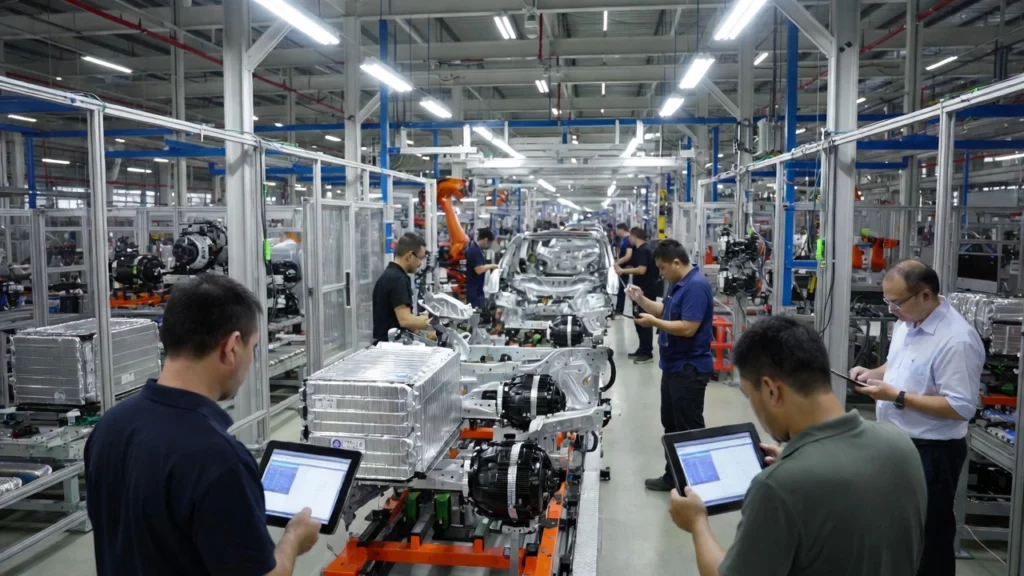
Electric vehicles demand tighter tolerances, superior surface finishes, and higher material precision than traditional internal combustion vehicles. Manufacturing processes such as precision stamping, hydroforming, fine blanking, deep drawing, and shrink fitting are becoming increasingly important.
Battery manufacturing offers a clear example. Cylindrical lithium-ion cells require deep-drawn metal casings and ultra-precise stamping processes. Although these metal cans account for a small percentage of battery cost, the global market for them is worth billions of dollars. Producing them at gigawatt-scale requires highly specialized machines that are still largely unavailable domestically.
Without strong domestic machine-building capability, India risks missing out on high-value segments of the EV supply chain.
Building a Strong Machine-Building Ecosystem
Mehta believes India has the potential to become a global leader in manufacturing technology. Indian toolmakers are already demonstrating competitive cost structures and improving product quality. With sustained R&D investment and capacity dedicated to innovation, domestic manufacturers can achieve world-class performance.
However, progress requires more than capital investment. Companies must allocate resources for experimentation, product development, and workforce skill-building. A robust machine-building ecosystem lowers production costs, improves product quality, and creates durable competitive advantages across industries.
When a nation builds a complete manufacturing ecosystem—from technology designers to machine manufacturers and product companies—it becomes a globally attractive production hub.
New Growth Drivers Beyond Automotive
While the automotive sector has traditionally driven machine tool demand, Mehta predicts that energy storage and industrial automation will become major growth engines in the coming decade. Robotics, factory automation, and renewable energy storage systems require similar precision manufacturing technologies as EVs.
These sunrise sectors present massive opportunities for Indian manufacturers to diversify beyond automotive and create scalable export-oriented businesses.
Technology Sovereignty and Supply Chain Resilience
Global supply chain disruptions over the past few years have highlighted the risks of over-dependence on external suppliers. Mehta stressed that technology sovereignty is now a strategic necessity rather than an option.
Strong domestic supply chains require suppliers to invest locally in design, engineering, and process ownership. Events like IMTEX help foster collaboration between OEMs, suppliers, and technology providers, accelerating knowledge exchange and ecosystem development.
Ather actively encourages supplier partnerships that focus on deep integration rather than transactional relationships.
Software Will Drive the Next Wave of EV Innovation
Beyond hardware, Mehta believes software will become the primary driver of customer experience and differentiation in EVs. Connected features, performance optimization, predictive maintenance, and user personalization will increasingly define product value.
As EV platforms mature, software upgrades will enable continuous improvement without changing physical hardware, unlocking long-term customer engagement and revenue opportunities.
Ather’s Growth Strategy: Scaling Without Diluting Innovation
Ather’s expansion strategy focuses on serving an upgrading India. From its initial performance scooter segment to the family-focused Rizta and upcoming EL platform, the company aims to expand across multiple segments while maintaining a technology-first identity.
Mehta emphasized that regardless of price category, Ather’s core objective remains consistent: delivering meaningful upgrades in customer experience through engineering excellence and innovation.
Conclusion
India’s EV future will not be built on assembly lines alone. It will depend on indigenous manufacturing, machine-building capability, software leadership, and technology sovereignty. Ather Energy’s journey illustrates how deep investments in engineering and manufacturing can create long-term competitive advantages for both companies and the nation.
As India strengthens its industrial ecosystem over the next decade, the shift from import dependence to innovation-driven manufacturing will define its role in the global EV economy.