
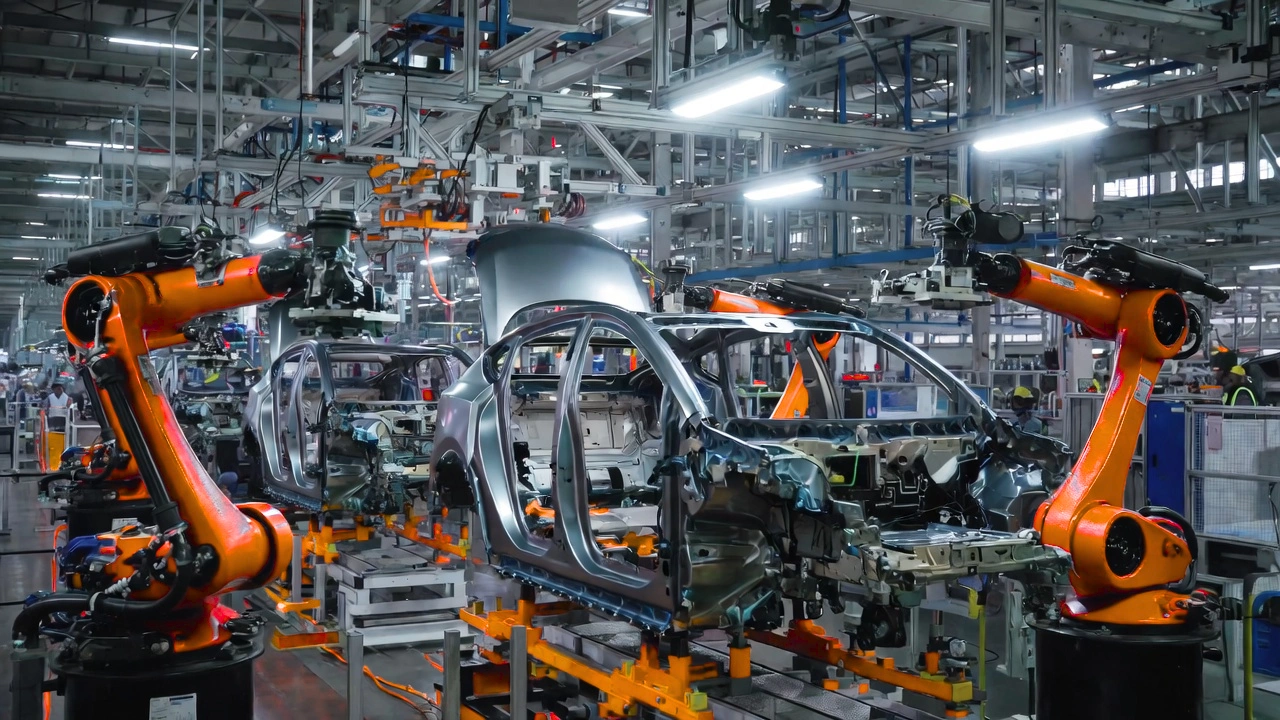
A weakening Indian rupee is reshaping the business strategy of Toyota Kirloskar Motor, pushing the company to expand localization efforts while simultaneously strengthening export operations from India. As currency depreciation increases import costs and enhances export competitiveness, Toyota is recalibrating its supply chain and production strategy to remain cost-efficient and globally competitive.
According to senior Toyota leadership, the rupee’s decline of nearly five percent in 2025 has intensified the urgency to source more components locally and scale exports of Indian-manufactured vehicles. This shift comes at a pivotal time as Toyota prepares to launch its first electric vehicle in the Indian market.
Weak Rupee Driving Localization in Auto Manufacturing
Currency depreciation directly impacts manufacturers that rely heavily on imported components, particularly in the electric vehicle segment where batteries, electronics, and advanced modules often come from overseas suppliers. A weaker rupee increases landed costs, compressing margins and raising vehicle prices.
Toyota Kirloskar Motor is responding by accelerating localization across its supply chain. This includes increasing domestic sourcing of parts, strengthening partnerships with Indian vendors, and expanding local manufacturing capabilities.
Greater localization offers multiple benefits. It reduces exposure to foreign exchange volatility, shortens supply chains, improves production flexibility, and supports government initiatives such as “Make in India.” Local sourcing also enhances cost predictability, which is critical in a price-sensitive market like India.
Toyota believes that expanding domestic content in its vehicles will enable better pricing stability while building a more resilient manufacturing ecosystem.
Export Opportunities Grow as Rupee Weakens
While a falling rupee raises import costs, it simultaneously improves export competitiveness. Vehicles manufactured in India become more attractive in overseas markets due to favorable pricing when converted into foreign currencies.
Toyota plans to capitalize on this advantage by exporting the Urban Cruiser Ebella, its upcoming electric SUV, to European markets. The model will be manufactured in India and shipped internationally as part of Toyota’s global production network.
India is increasingly becoming a strategic export hub for automakers due to improving manufacturing quality, skilled labor availability, and scalable supplier networks. Toyota views this opportunity as a long-term growth lever that can balance domestic market fluctuations.
Urban Cruiser Ebella: Key Product in Toyota’s Export Strategy
The Urban Cruiser Ebella plays a central role in Toyota’s localization and export roadmap. The electric SUV has been sourced through Toyota’s global alliance with Maruti Suzuki and is based on the eVitara platform. While the vehicle is developed collaboratively, Toyota applies its own quality standards, branding, and global distribution channels.
The model allows Toyota to enter the Indian electric vehicle market quickly while minimizing development risks and investment cycles. For exports, the Ebella provides a competitively priced electric SUV suited to evolving European emission regulations and urban mobility trends.
By leveraging shared platforms and localized manufacturing, Toyota can optimize cost efficiency and accelerate market entry across regions.
Strategic Importance of Local Manufacturing Ecosystem
Toyota’s localization strategy extends beyond vehicle assembly. The company aims to deepen supplier capability development, improve local component quality, and strengthen logistics efficiency.
Investments in training programs, technology transfer, and supplier integration help ensure global quality benchmarks are maintained while achieving higher local content ratios. This ecosystem-driven approach reduces long-term dependency on imports and enhances sustainability.
Additionally, localization contributes positively to employment generation and industrial development, aligning with national manufacturing objectives.
Electric Vehicle Market Dynamics in India and Europe
The electric vehicle market in India is expanding steadily due to government incentives, rising fuel costs, and growing environmental awareness. However, pricing sensitivity remains a challenge. Localization is therefore essential to keep EV prices accessible to consumers.
In Europe, stricter emission regulations and growing EV adoption continue to drive demand for electric SUVs. Exporting from India allows Toyota to serve this market efficiently while optimizing production costs.
Balancing domestic growth with export scalability gives Toyota diversified revenue streams and greater resilience against regional demand fluctuations.
Currency Risk Management and Long-Term Stability
Currency fluctuations remain a constant risk for global manufacturers. Toyota’s dual approach of localization and exports helps hedge against exchange rate volatility.
Higher localization reduces import exposure, while increased exports provide natural currency hedging by generating foreign currency revenue. This balanced model supports financial stability and predictable margins over time.
Toyota also maintains structured financial hedging mechanisms to minimize short-term currency risks.
Outlook: India Emerging as Toyota’s Global Production Hub
With rising localization and export momentum, India is positioned to become a strategic production hub within Toyota’s global operations. The combination of competitive manufacturing costs, improving infrastructure, and supportive policy frameworks strengthens India’s role in Toyota’s long-term expansion plans.
As the company prepares to launch its first electric vehicle domestically while exporting to international markets, Toyota is aligning operational efficiency with global growth objectives.
The weakening rupee, while challenging, is serving as a catalyst for structural transformation across Toyota’s India business.