
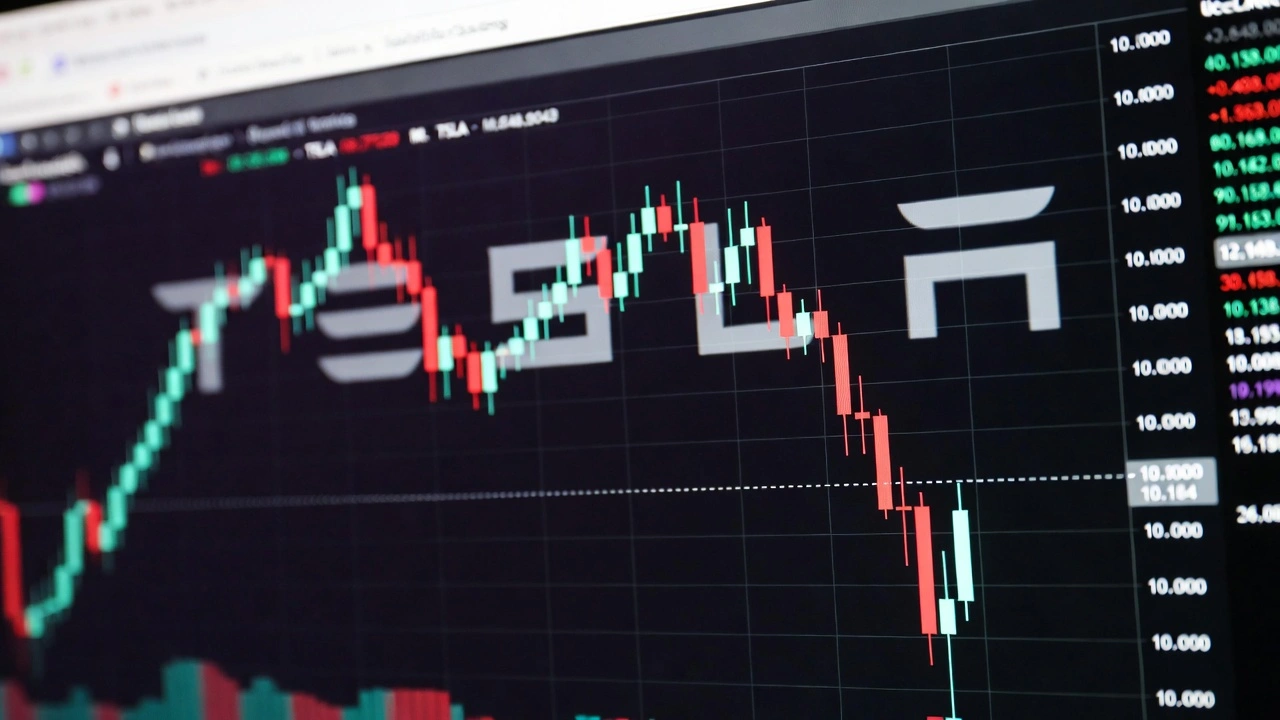
Tesla Inc. (NASDAQ: TSLA) shares have entered a technically significant phase after falling below their 100-day moving average (100-DMA) for the first time in more than six months, raising fresh questions about near-term momentum even as retail investors remain optimistic about a rebound toward the $400 level.
The move marks a notable shift in Tesla’s technical structure. For much of the past half-year, the 100-DMA had acted as a reliable support level, helping stabilize the stock during periods of volatility. Breaking below it has historically signaled either a deeper correction—or, in some cases, a temporary shakeout before renewed upside.
A Technically Important Breakdown
The 100-day moving average is closely watched by both institutional traders and short-term technical analysts as a medium-term trend indicator. Tesla’s failure to hold above this level suggests weakening bullish momentum after a strong run in late 2025, when the stock rallied sharply on optimism surrounding autonomy, robotics, and AI-driven growth narratives.
In recent sessions, TSLA has faced increased selling pressure, driven by a combination of profit-taking, broader market uncertainty, and renewed concerns over valuation. As the stock dipped below the 100-DMA, trading volumes picked up, indicating that the move was not merely a low-liquidity anomaly but a widely observed technical event.
Macro and Company-Specific Pressures
Tesla’s recent weakness comes amid a challenging macro backdrop. Persistent high interest rates have continued to weigh on growth stocks, particularly those with premium valuations. Tesla, which still trades at a multiple far above traditional automakers, remains especially sensitive to shifts in risk appetite.
On the company-specific side, investors are recalibrating expectations after a period of aggressive optimism. Slowing global EV demand, increased competition from Chinese manufacturers, and margin pressure from price cuts have tempered enthusiasm around Tesla’s core automotive business.
At the same time, Tesla’s ambitious pivot toward autonomy, robotics, and AI infrastructure requires substantial capital investment. While long-term believers see this as value creation in progress, short-term traders often react negatively to rising costs and delayed monetization timelines.
Retail Investors Stay Bullish
Despite the technical breakdown, retail investor sentiment remains notably resilient. On popular trading forums and social platforms, many individual investors are treating the dip below the 100-DMA as a buying opportunity rather than a warning sign.
A common theme among retail traders is the expectation that Tesla shares could reclaim the $400 level in the near term, citing several potential catalysts. These include anticipation around Tesla’s upcoming Cybercab developments, further progress in Full Self-Driving software, and renewed momentum if broader tech stocks rebound.
Some retail investors also point to Tesla’s historical pattern of sharp pullbacks followed by rapid recoveries, arguing that technical breaks often precede strong upside moves once selling pressure exhausts itself.
Institutional Caution vs. Retail Conviction
Institutional sentiment, however, appears more cautious. Several large funds have reduced exposure to high-multiple growth names, preferring to wait for clearer signals on earnings growth and macro stabilization. From this perspective, the break below the 100-DMA reinforces a “wait-and-watch” approach rather than an immediate buying signal.
Analysts note that if Tesla fails to reclaim the 100-DMA quickly, attention could shift to the 200-day moving average, a longer-term support level that often defines broader trend direction. A sustained move toward that level could invite further volatility.
Conversely, a swift recovery back above the 100-DMA would likely be interpreted as a false breakdown, potentially triggering renewed buying from momentum traders.
The Psychological Importance of $400
The $400 price level has taken on symbolic significance for Tesla traders. It represents not only a round-number psychological barrier but also an area where the stock has previously faced heavy resistance and support.
For bullish investors, a move back toward $400 would signal that Tesla’s growth narrative remains intact and that the recent pullback was a temporary reset rather than a trend reversal. For bears, failure to approach that level would strengthen the argument that Tesla’s valuation is still adjusting to a slower-growth environment.
What Comes Next for TSLA?
In the near term, Tesla’s stock direction will likely be shaped by a mix of technical factors, broader market trends, and company-specific news flow. Developments related to autonomous driving, AI investments, and geopolitical risks affecting supply chains could all influence sentiment.
While the break below the 100-DMA introduces caution into the technical picture, it has not yet decisively altered Tesla’s longer-term trend. The next few weeks will be critical in determining whether the stock stabilizes and rebounds—or continues to search for a lower support base.
For now, Tesla remains a stock caught between institutional caution and retail conviction, with the $400 mark looming large as the next major test of market confidence.