
India’s electric car revolution may look nationwide on the surface, but a closer look at the numbers reveals a strong regional concentration. Nearly two out of every five electric four-wheelers sold in the country come from just three southern states — Karnataka, Kerala, and Tamil Nadu. Together, these states have quietly emerged as the backbone of India’s passenger EV market.
Over the past five years, these three states have consistently accounted for around 30 to 35 percent of all electric car registrations in India. What makes this trend striking is that it has remained stable even as the overall EV market has grown dramatically — from just 3,252 units in 2020 to nearly 1.7 lakh units in 2025.
A Long-Term, Structural Lead
Southern India’s dominance in electric car adoption is not the result of short-term incentives or temporary policy pushes. It is structural and deeply rooted. Even in 2020, when EVs were still a niche segment, Karnataka, Kerala, and Tamil Nadu together made up around 38 percent of national EV registrations.
As electric cars gradually spread to more states, the South’s share moderated but did not collapse. Between 2021 and 2025, it consistently stayed in a narrow band of 31 to 33 percent, showing that while other regions are catching up, the South continues to grow at pace with the national market.
If Maharashtra is added to the mix, the picture becomes even clearer. Maharashtra, Karnataka, and Kerala together now contribute roughly 40 percent of India’s four-wheeler EV volumes, making them the single most important cluster for electric car demand in the country.
Geography Works in the South’s Favor
One of the biggest reasons behind this trend lies in how and where people drive. Large southern cities like Bengaluru, Chennai, and Hyderabad are especially well-suited for electric vehicles. Daily driving in these metros typically involves shorter trips, predictable routes, and limited dependence on long highway journeys — ideal conditions for EVs.
Kerala offers a slightly different but equally compelling advantage. Its unique urban structure — a long, continuous stretch of connected towns along major highways — functions almost like one extended city. This makes EV travel feel routine rather than risky, reducing the fear of running out of charge.
Simply put, regions where people drive in consistent, repeatable patterns tend to overcome range anxiety faster, and that plays strongly in favor of southern states.
Charging Infrastructure Strengthens Confidence
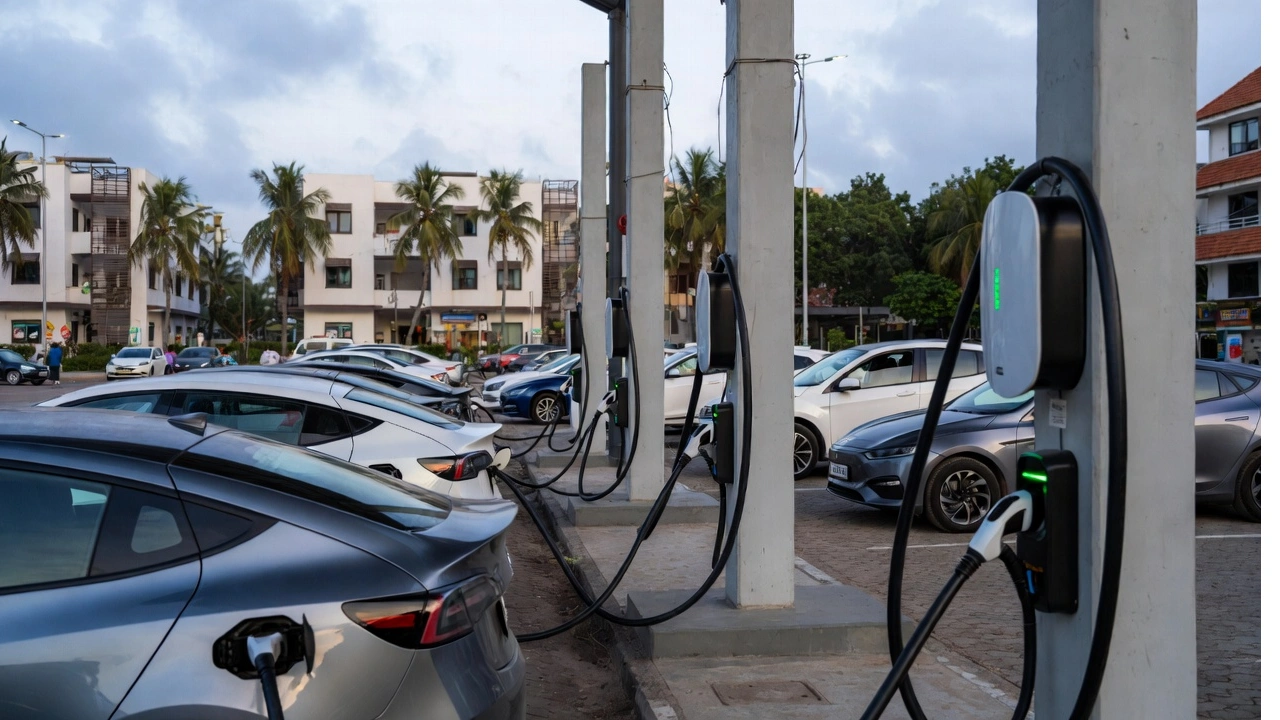
Charging availability has grown faster and more evenly in the South than in many other parts of India. Both government-led and private initiatives have helped establish dense charging networks and inter-city corridors, improving confidence for longer trips.
Cities like Bengaluru stand out in particular. The city benefits from:
- A large base of tech-savvy early adopters
- EV-heavy app-based cab fleets
- Active private charging players
Together, these factors have helped normalize EV ownership and usage earlier than in many northern metros.
Even buyers who primarily charge at home gain confidence from knowing public chargers are readily available if needed — a psychological advantage that plays a major role in purchase decisions.
Demand-Side Factors Also Matter
Southern India also has high vehicle ownership rates, a large salaried urban population, and relatively predictable commuting patterns. These factors align well with EV usage.
Home charging is easier to adopt in many southern cities, especially for buyers living in independent houses or apartment complexes with organized parking. Once overnight charging becomes routine, dependence on public infrastructure drops sharply, and EV ownership begins to feel effortless for everyday use.
This practical ease — rather than flashy technology or large subsidies — has been a key driver of sustained demand.
National EV Growth, But Uneven
At the national level, EV penetration is clearly rising. Electric four-wheelers accounted for about 4 percent of total car sales in calendar year 2025, up from 2.4 percent in 2024. However, this growth remains unevenly distributed.
If southern states continue to hold a 30 to 35 percent share while the overall market expands, it also means they are adding new EV volumes faster than most of the country.
Subsidies Matter Less Than Before
State incentives, once a major deciding factor, now play a smaller role. With many subsidies differing by only ₹10,000 to ₹30,000, buyers are increasingly influenced by:
- Charging convenience
- Ownership experience
- Total cost of ownership
In other words, daily practicality has overtaken policy support as the main driver of adoption.
What Comes Next
As charging infrastructure expands into tier-II and tier-III cities, more EV options enter the ₹10–25 lakh price range, and cost parity with petrol cars improves, EV adoption is expected to spread more evenly across India.
Northern and western states are already catching up in absolute volumes, even if penetration levels still lag behind the South. Over time, electric car demand is likely to mirror broader passenger vehicle trends — but for now, southern India remains firmly in the driver’s seat of India’s EV transition.