The year 2026 is shaping up to be a defining moment for Elon Musk’s Tesla. From self-driving cars and robotaxis to humanoid robots and long-delayed vehicle launches, this year could determine the company’s long-term direction.
Elon Musk himself has framed 2026 as a turning point. On January 1, he posted on X, “2026 will be something special.”
However, analysts say that Tesla now needs more than bold promises — it must prove its technology can work reliably at scale.
Four Major Bets Defining Tesla’s Future
Tesla’s plans for 2026 can be grouped into four major areas:
- Self-driving software for consumer vehicles
- A fully autonomous robotaxi service
- Optimus, Tesla’s humanoid robot
- The long-awaited unveiling of new vehicles, especially the Roadster
According to Morningstar analyst Seth Goldstein,
“2026 is going to be the prove-it year for Tesla’s robotaxi business. If autonomy doesn’t scale, the company’s future becomes much more uncertain.”
Robotaxi Expansion: The Ultimate Test
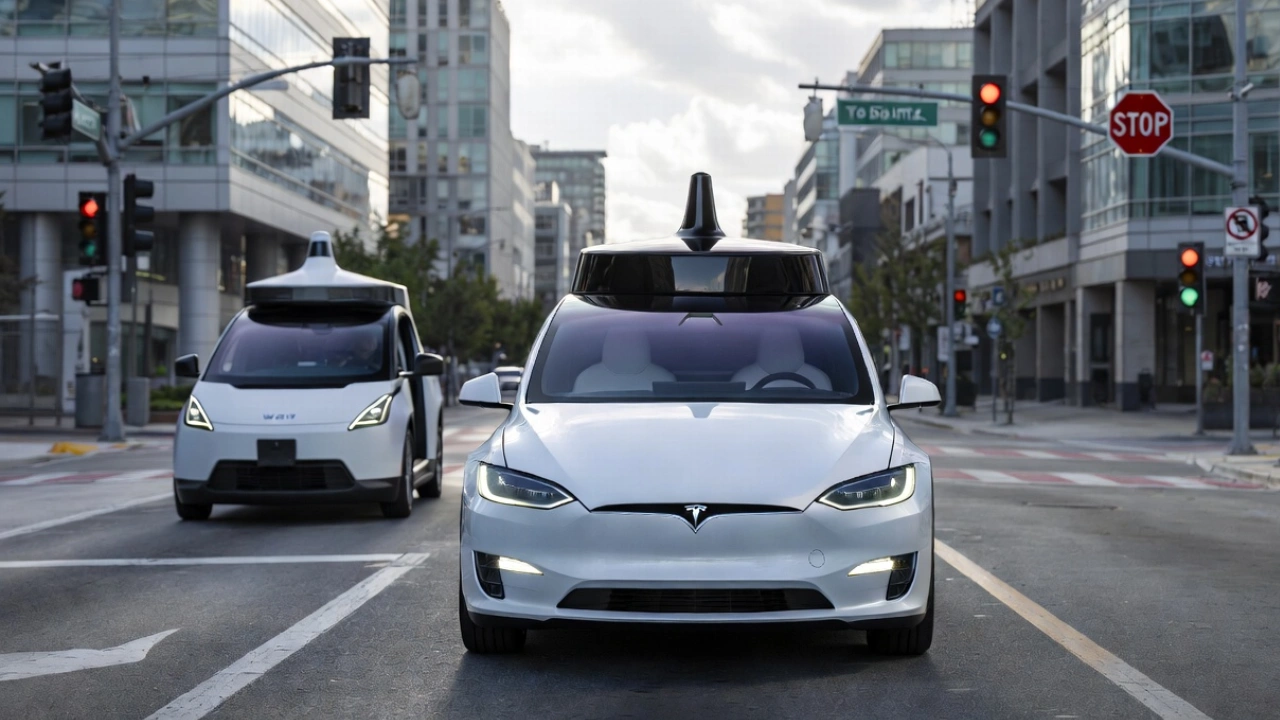
In June 2025, Tesla launched a limited robotaxi service in Austin, Texas. While the vehicles drove themselves, a safety driver sat in the front passenger seat to intervene if necessary.
In 2026, the biggest questions are:
- Will regulators allow Tesla vehicles to operate without safety drivers?
- Is Tesla confident enough in its technology to remove human oversight entirely?
Currently, Tesla robotaxis operate in Austin, Phoenix, San Francisco, Los Angeles, and Atlanta.
Cybercab: No Steering Wheel, No Brakes
One of Tesla’s most ambitious and controversial projects is the Cybercab — a two-passenger autonomous vehicle with no steering wheel or brake pedals.
Elon Musk has said volume production could begin in April 2026, calling the vehicle fully optimized for autonomy and predicting “insane demand.”
Tesla claims a significant advantage over competitors, citing more than six billion miles driven using Full Self-Driving in supervised mode — data it says strengthens its AI systems.
Growing Competition and Musk’s Confidence
While companies like Nvidia, Rivian, Ford, and General Motors continue to advance their autonomous technologies, Musk remains dismissive.
He has publicly claimed that Tesla is five years ahead of Nvidia — currently the world’s most valuable company — in self-driving technology.
Still, many analysts remain cautious, noting that competitors are closing the gap rapidly.
The Roadster Returns — With a Twist
Tesla’s second-generation Roadster was first unveiled in 2017 but has faced repeated delays. It is now scheduled for another unveiling on April 1, 2026 (April Fool’s Day).
Musk has said the new Roadster is being developed in collaboration with SpaceX and may include rocket-inspired technology.
“This will be the most memorable product unveil ever,” Musk has claimed.
Optimus: The Humanoid Robot Vision
Optimus may be Tesla’s boldest — and riskiest — project yet. Musk has described it as potentially “the biggest product ever.”
The humanoid robot is intended to perform general-purpose tasks such as:
- Folding laundry
- Tightening screws
- Cooking simple meals
However, development has been challenging. Musk has admitted that designing Optimus’ hands alone is an “incredibly difficult engineering challenge.”
Tesla has suggested that Optimus could eventually be produced at scale for other companies by 2026.
Falling EV Sales Increase Pressure
Tesla has reported two consecutive years of declining vehicle sales, with analysts warning that 2026 could mark a third straight year of decline.
Meanwhile, Chinese automaker BYD has surpassed Tesla in vehicle sales, offering lower-priced EVs in key markets like China and Europe.
Experts argue Tesla must:
- Introduce more affordable entry-level EVs
- Reduce reliance on autonomy hype alone
Despite these challenges, investor confidence remains strong. Tesla shares hit record highs in December, reflecting continued belief in Musk’s long-term vision.
Conclusion
For Tesla, 2026 is not just another year — it is a critical test of credibility, execution, and technological leadership.
If Elon Musk delivers on his promises, Tesla could redefine transportation and artificial intelligence on a global scale. If not, intensifying competition and market shifts could leave the company struggling to keep up.